Thinking Thought Out
There is no alternative, except between being influenced by thought that has been thought out and being influenced by thought that has not been thought out — GK Chesterton

Latest blog posts
When I’m not distracted by other projects I try to write a post once a month. Typically, I focus on biblical theology, metaphysics, and ethics.
-
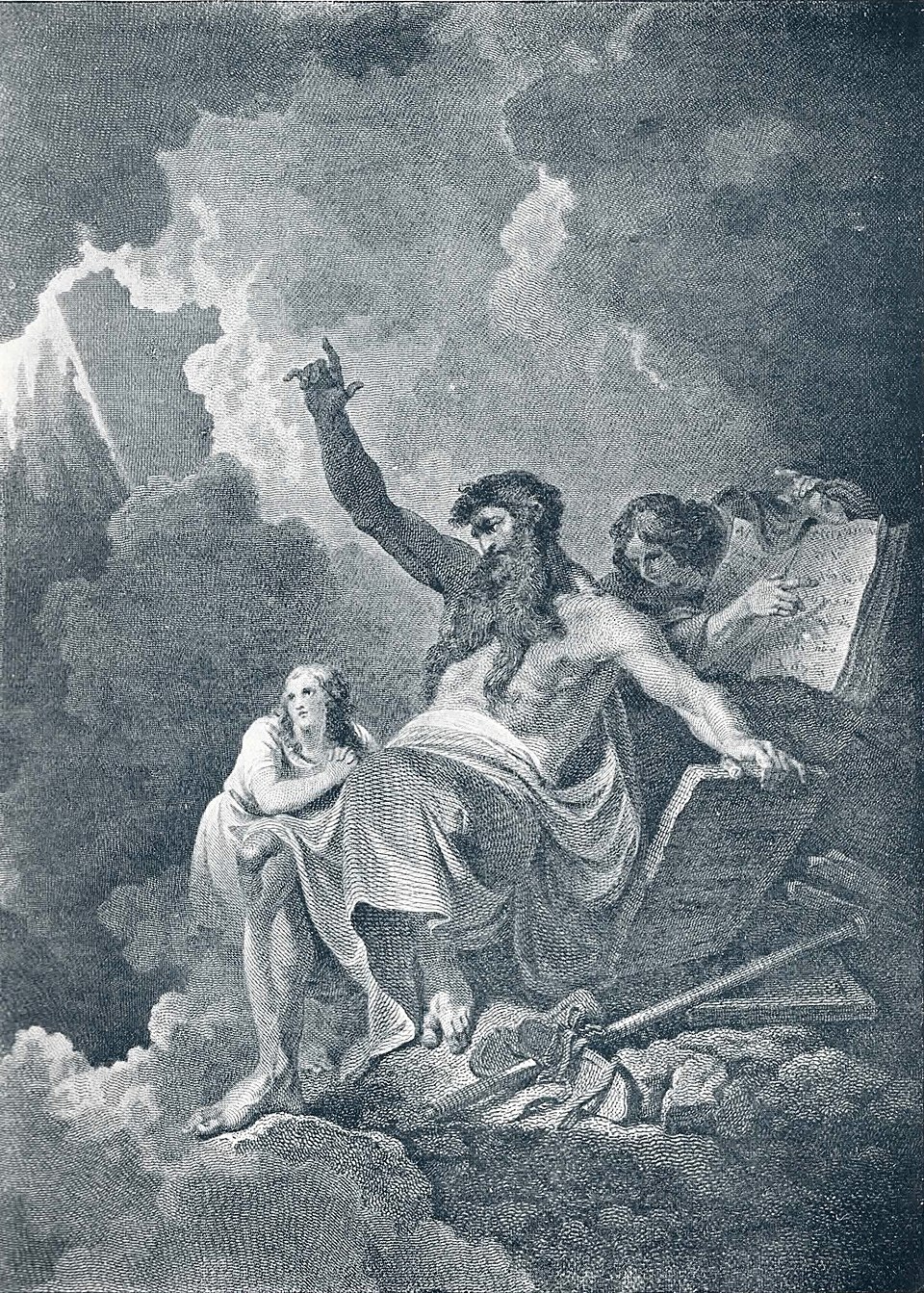
The law is a guide because it is fulfilled
I propose that the purpose of the law was to draw Israel from sin and death to a holy life with God, and that though we are not under law, in Christ we have the life to which it pointed and therefore it is guide for us.
-

A sketch of Reformed-Thomist doctrines of grace
My suggestion in this post has been that the “five points of Calvinism” are an imperfect realization of the Reformed convictions about predestination. The desires for a high view of divine sovereignty and agency and the recognition of the inevitability and depth of human sin are both well-placed, but we need to analyze them within a robust philosophical theology and…
-

Existential Inertia: A Thomistic Appraisal
The intuitions that might draw us to existential inertia are tracking something real, but deeper analysis shows that there is an extra dimension that needs to be considered. The argumentation in the De Ente shows that essence is really distinct from esse in all but one thing, so that while substantial form is a principle of existential inertia, this still…
-

Causing the perpetuity of an accidentally ordered series
Does Aquinas’s First Way conclude with an immovable first mover? The answer depends on whether we interpret the First Way as an exercise in natural philosophy or metaphysics. Either could work, and will produce philosophical fruit, but the resulting arguments grow ever different.
-
The limits of the mediation of icons
While it is true that honor given to the image sometimes passes through to the prototype, this is limited by the nature of the image. If the image is dead, then it cannot mediate the honor of bilateral acts, such as prayer and worship, and any attempt to misuse them as such devolves into idolatry.
-

Series of talks on the Trinity
A few weeks ago, I finished giving a series of talks on the Trinity. I have now uploaded the talks here, so that anyone who is interested can access them. There are four talks in total. In the first two I discuss how the New Testament describes Jesus as divine, working within the theological context of the Old Testament. The…
-

Indeterminacy, infinity, and participation
My recent “three principles” post arose from a lengthy discussion I had with reader StructureOfTruth in the comments of an earlier post on limitation. Thankfully, StructureOfTruth continues to keep me honest, and has raised the following concern in the comments on my “three principles” post: The greatest difficulty I have with your line of thought in this post is (still) this idea of…
-

Three principles about act and potency
A while ago I wrote a series of blog posts on potentiality, change, and limitation. I am always on the lookout for better ways of articulating the act-potency distinction, since it serves as a foundation for much of the Aristotelian-Thomistic framework that I find so useful in philosophy and theology. The original post, from two years ago, was occasioned by comments made by…
Larger projects
From time to time I work on projects that are larger than a blog post, but which are related to the sorts of topics that I discuss within the blog. These are collected here.
-
The Trinity
In early 2025, I gave a series of four talks on the topic of the Trinity, with a focus on the way in which the biblical authors articulated it and the early church developed models for it. Here I collect the talks, as well as some recommended readings. The Trinity in the New Testament: Gospels…
-
The Idolatry of Icons
A biblical critique of the use of images for worship, wherein I argue that it amounts to idolatry. We begin by discerning the problem of idolatry; then we turn to the question of whether the incarnation affects the legitimacy of using images for worship; and we close by considering some common responses to this critique.…
-
Disputed Questions on Scripture and Tradition
A biblical and historical defense of sola scriptura in the disputed questions format used by Aquinas in his Summa Theologica. The document is broken down into three sections. First, a formulation and biblical defense of sola scriptura; second, an examination of various early church fathers that believe in sola scriptura (including Irenaeus of Lyons, Cyprian…
-
Omni-instrumentality
Divine providence is about God’s direction of all history in accordance with his plans, without thereby frustrating human freedom or undermining nature. Much discussion exists about what the best philosophical model is for making sense of this, and various models have been proposed over the centuries (see the relevant section on my resources page for…
-
Leviticus
Over a period of five weeks in 2018, I led a Bible study on the book of Leviticus. After each session, I wrote up detailed notes based on the research that went into it as well as the discussion we had in the session itself. What started out as a study on a weird and…
-
The Genesis Prologue
In 2017 I led a bible study on the first eleven chapters of Genesis. In the course of preparing the studies, I found myself reading some of the literature on these early chapters, and began realizing that it would be worth combining a number of insights into a comprehensive exegetical account. At the moment, this…
-
God is: Apologetics study series
God is is an apologetics study series that I an two others wrote for my church. Made up of 5 studies, the series is meant as an introduction to apologetics, and is aimed at students who have not had much exposure to apologetics. You can get a copy of it here. Overview of studies Each week…

